Saturday, May 12, 2018

TDATS 138: Get Out Of My Life, Woman [Covers Special #2]


Download from: [mf] or [yd]
Pass: tdats


Better late than never! Yes this blog is not dead, it's just been on a break, and will be back with more frequency if time allows in the foreseeable future. I'm pretty sure I can, and would like, to reach 200 volumes one day. Thanks to all those that have continued to show interest in it and especially thanks to you guys who have continued to mod and join-in on the facebook group.

This volume has been in gestation for a while, just as the similarly-themed Vol.105 - Goin' Down (link) was, and like that one, this is a bit of fun going through a number of covers of a stone cold classic song. In this case it's Get Out Of My Life Woman.

Lee Dorsey

This song was written by New Oeleans' writer/producer Allen Toussaint, and first released on record by Lee Dorsey in 1966. Like "Going Down", it was covered countless times by famous and obscure artists alike, and it's such a great song that it can fit any style from blues to funk to hard rock/psych or anything else....it's just one of those timeless compositions that grabs you from the first bar. (How many bars have you heard this in?)

TRACKS

01. Ginger Ale (1970)
       single and "Cosmarama 20 Top ProgPsych Behemoths"
02. Made in Sweden (1970)
       from LP "Live! at the Golden Circle"
03. Ant Trip Ceremony (1968)
       from LP "24 Hours"
04. The Five D (1967)
       single and "Ottawa Rocks, The Sir John A. Years"
05. Heather Black (1978)
       from "Heather Black Live"
06. The Love Exchange (1968)
       from LP "The Love Exchange"
07. Mountain (1974) [Live]
       from "King Biscuit Flower Hour"
08. The Blackburds [Instrumental] (1967)
       from EP "Play The Bugaloo"
09. The Conqueroo (1968)
       from LP "From The Vulcan  Gas Company"
10. Q65 (1966)
       from LP "Revolution"
11. Spirit [Live] (1972)
       from "The Original Potato Land"
12. South 40 (1968)
       from "Live At Someplace Else"
13. Mighty Joe Drake (1969)
       single
14. The Roadrunners (1970)
       single and from "How Is the Air Up There?"
15. The Lost Souls
       single

Ant Trip Ceremony - 24 Hours
Opening is Ginger Ale from Amsterdam, who made a bunch of funky singles (this is no exception) and had lots of connections to other bands such the Dean Alan Set.

Made In Sweden was a prog/jazz/blues supergroup from Stockholm who made five LPs. Their live rendition of this song is some blistering bluesrock that really shows off some instrumental skill!

Ohio's Ant Trip Ceremony will be familiar to obscure psych fans already, their 1968 LP "24 Hours" has gained notoriety, largely due to it's rarity and mind-melting cover art. Ottowa's The Five D has been comped in a few Canadian collections and made a few singles in the late sixties. They stand out in this collection by taking a less typical direction with this great driving acoustic pop version.

Track 5 is live from what appears to be a Southern Rock band called Heather Black. Details are a little unclear and info on Discogs may be incorrect, but if they are, this band made a self-titled studio LP in 1970, and a double live album was issued multiple times in 1970, 1972 and 1978 (some of which possible bootlegs?) on "American Playboy Records" (link). In this song DJ Buddy King is thanked, who a bit of googling indicates may have been of Louisiana's KVOL (link).

The Blackburds
LA's flower power The Love Exchange made one LP in 1968 and had a hit with single "Swallow the Sun". This may be the lightest track on here but it's the only one with a female lead so it's something a bit different, one of those times a girl sings lyrics written from a man's perspective without altering them.

France's The Blackburds appear to have played with pop star Johnny Hallyday, and they made an EP in 1967 called "Play the Bugaloo" which this groovy instrumental is taken from.

Austin TX's The Conqueroo played at The Vulcan venue alongside names such as Thirteenth Floor Elevators and Johnny Winter (link). A live record was posthumously released some time later, called  "From The Vulcan Gas Company".

Randy California
The Hague's Q65 are a Dutch rock classic and have been on the blog before, this track is from their "Revolution" LP, with their usual swagger.

The brilliant Spirit are famous and have been on here before too of course. This live track may have been originally recorded when guitarist Randy California was performing his own stuff but it has since been consolidated on "The Original Potato Land", a 'lost' Spirit LP. This is most definitely the sound that contemporary stoner rock bands such as Kyuss were channelling, that guitar sound!

South 40's rendition here is fast and cool, with a bit of keyboard action. The main reason for its inclusion is that South 40 was the original name of Minneapolis brass rockers Crow, who legendarily wrote Evil Woman, which Black Sabbath made their own soon after! This is from South 40's 1968 album "Live At Someplace Else".

The closing three tracks are all from obscure singles, and they all offer a fresh take on the song. Mighty Joe Drake's funking monster is just fun as hell, I love the speed, psych guitar and Joe's aggressive delivery, plus the funky breaks. The Roadrunners single is featured on many New Zealand comps and is a piece of rough'n ready freakbeat with raw guitar power, and The Lost Souls' closer is a hyperspeed wig-out propelled by pounding keys and frantic drums that enters and exits like a hurricane!


Thanks for listening, as ever.

Related listening:
The Day After The Sabbath 105: Goin' Down [covers special]


TDATS social links


Share via:

Monday, May 15, 2017

Heat Exchange & Squadran released at last!


This year, two bands that I have contacted for interviews on the blog in the past have released previously un-heard material. I'm very happy that the exposure they got here has contributed in some way and helped or encouraged them get their music out there! These bands are Heat Exchange from Toronto, and Squadran from New York.


Reminiscence
[Buy LP/CD/Digital HERE]
Heat Exchange worked on an album in 1972 which was recorded by a major Canadian label but, apart from a few resulting singles, was never released. You can read the extensive story that band-leader Craig Carmody wrote for Volume 96 in this blog (link). Their music is fresh, progressive, frequently heavy and always catchy, and the belated release of the LP "Reminiscence" by Out-Sider (distributed by Guerssen Records) is a very satisfying end to the Heat Exchange story. It pulls together all the original masters that were intended for the album, four of which have never been heard, and all the singles.
 

Squadran
[Buy: CD Baby, Amazon]
Squadran was featured in the US metal Volume 126 (link) and recorded an excellent single in 1979, on which "The Wall" was some of the fastest, most extreme metal I had ever heard from the 1970s. Drummer Mike Gandia has recently over-seen the release of their only recorded material from around the time of the single, on a new CD called "You Are Under Attack". This is four studio tracks and two live.

The music lives up to the promise shown by "The Wall", with obvious homage to Sabbath, but Mike also points out that Squadran were one of the first US bands to show appreciation for Judas Priest and were heavily influenced by them also.

Check out the previews below and support the bands at Heat Exchange Guerssen and Squadran Facebook. Cheers to Craig and Mike, and thanks for listening!

Further reading:
TDATS #96: Heat Exchange (with Craig Carmody)
TDATS #126: Into The Pit [US Metal 1976 - 79] (feat. Mike Gandia)

TDATS social links

Previews
Heat Exchange

Squadran

Saturday, April 29, 2017

The Day After The Sabbath 137: Tierra del Fuego [Argentina 1]


Download from: [mf] or [yd]
pass:  tdats


It's time to look at Latin American rock again. There are now 8 Latin American themed volumes:  43: General | 84: Brazil 1 | 89: Mexico 1 | 104: Peru 1 | 136: Argentina 1 | 144: Venezuela 1 151: Bolivia | 118: Chicano Rock

Argentina has always been a prolific maker of music, along with specialties like its native folk and tango scenes, it has been prolific in rock'n roll since the '50s. The country prides itself in "Rock Nacional" and singing in the native tongue of Spanish - you'll notice none of the songs in this volume are in English, which is unusual compared to any of the other national comps I have done, however exotic their location.

Some explanation of Argentina's love of rock is expressed here: "...there was no freedom in Argentina at that time. It was a time of oppression – there was a dictatorship. The police used to arrest hippies and cut their hair, or arrest them and torture them. And when they were freed a lot of them took up their guitars and began writing songs. It was a way to protest their situation. Rock Nacional became a motive to exist." - Ezequiel Abalos, DJ and Rock historian (link)

There are many old bands to find from Argentina, of the South American countries it has probably the largest amount of hard rock I have come across so far and this hour of music will definitely have to be a "part 1" for the country, as there are lots more to include later in the blog, such as Vox Dei and Orion's Beethoven and many others. If anyone wants to suggest bands for a later volume please do!

In terms of hard rock and "Rock Nacional", Los Gatos are one of the bands to mention first. They were the first to make albums solely of their own compositions, and the first to sing only in Spanish. They were established in the Santa Fe city of Rosario in 1967, with two members coming from beat band Los Gatos Salvajes. Two prominent names that came from Los Gatos are original singer Litto Nebbia and Norberto Aníbal Napolitano (aka 'Pappo') who joined in 1969. Los Gatos' final LP in 1970 was one of Argentina's first LPs to include the "hard rock" combination of hammond organ with Pappo's distorted riffs, although most of its songs still bear the hallmarks of their beat/garage origins.

B.A. Rock I in 1970
Picture source: scielo.org.ar
Argentina's first big festival when it comes to hard rock and prog was the capital's "B.A. Rock" (Buenos Aires Rock), which initially had three annual installments from 1970 to 1972. It was organised by Pelo magazine editor Daniel Ripoll and the first two were staged at the Palermo Velodrome.

Los Gatos were there, as well as Vox Dei and names showing-up in this comp such as Miguel Abuelo, Contraluz, Piel De Pueblo and Pappo's Blues. Later the festival drew international names like the UK's Spirit Of John Morgan. In 1982 there was a revival with "B.A. Rock IV".

B.A. Rock II (1971)

TRACKS
01. Alejandro Medina y La Pesada - Algo Muy Profundo [intro edit] (1974)
       from album 'Alejandro Medina y La Pesada'
02. Contraluz - La Sarna Del Viento (1973)
       from album 'Americanos'
03. El Reloj - Vuelve El Día a Reinar (1973)
       single - also found on "Cronologia I" (BMG 1995)
04. Miguel Cantilo y Grupo 'Sur' - Algo Está Por Suceder (1975)
       from album 'Miguel Cantilo y Grupo Sur'
05. La Banda Del Paraiso - No Lo Veo (1973)
       from album 'La Banda Del Paraiso'
06. Ricardo Soulé - Muchos Caminos y Desafios (1977)
       from album 'Vuelta a Casa'
07. Miguel Abuelo & Nada - Octavo Sendero (1973)
       from album 'Miguel Abuelo & Nada'
08. Los Gatos - Invasion (1970)
       from album 'Rock De La Mujer Perdida'
09. Piel De Pueblo - Silencio Para Un Pueblo Dormido (1972)
       from album 'Rock De Las Heridas'
10. Caballo Vapor - Sembrare Tu Piel (1976)
       single
11. Pescado Rabioso - Sombra De La Noche Negra (1973)
       from album 'Pescado 2'
12. Plus - Apagón De Luces En La Curva (1978)
       from album 'Plus'
13. Aquelarre - Canto (1972)
       from album 'Aquelarre'
14. Luis Alberto Spinetta - Castillo De Piedra (1971)
       from album 'Almendra'
15. Pappo's Blues - Insoluble (1972)
       from album 'Pappo's Blues 2'
16. Alejandro Medina y La Pesada - Algo Muy Profundo [reprise edit] (1974)
       from album 'Alejandro Medina y La Pesada'

References
magicasruinas.com.ar | lahistoriadelrock.com.ar | rock.com.ar
ContraluzRock.blogspot.co.uk

Alejandro Medina y La Pesada
Starting (and ending) with edits of a track from Alejandro Medina y La Pesada's eponymously-titled LP, these book-end the comp with some haunting progressive folk rock. Bass player and song writer Alejandro Medina was in a bunch of bands including forming blues rockers Manal, as well as Pappo's Blues and Aeroblus with Pappo.

La Pesada del Rock and Roll (literally meaning "The Heavy Rock and Roll") was originally formed by producer Jorge Álvarez as a backing band for Billy Bond. Throughout its changing roster it included many of Argentina's top rock musicians and backed other records such as Raúl Porchetto's Cristo Rock, and made an LP proper in 1972 as La Pesada called "Buenos Aires Blus". La Pasada has its own Spanish Wiki page (link).

Contraluz - "Americanos"
Contraluz opens firing on all cylinders with the next track, they made an album in 1973 called "Americanos" which has a diverse mix of plaintive folk-tinged prog with flutes and some heavy blasters with really fierce guitar credited to Carlos Barrios.

"La Sarna Del Viento" rages along with impassioned vocals from Alvaro Cañada, it's about as heavy and foreboding as anything from 1973. The break-down at the half way point is pure over-driven heavy metal and this whole track is an absolute delight that builds and builds. Contraluz has made occasional re-appearances and recorded a new album as recently as 2011.


El Reloj - Vuelve El Día a Reinar
El Reloj 45
b/w "Vuelve El Día a Reinar"
Rosario's El Reloj ("The Clock") started in 1971 and made their name as one of Argentina's original purveyors of heavy progressive rock. They are often compared to Deep Purple, and with their swirling hammond and fast, technical style that often verges on heavy metal, they certainly deserve that comparison.

Their early singles, of which "Vuelve El Día a Reinar" is one, have a more direct hard rock approach, their subsequent albums became more symphonic and experimental, while still frequently displaying metallic speed and precision. El Reloj has sporadically made new LPs into the 2000s but has unfortunately been hindered by the deaths of some original members.

Miguel Cantilo y Grupo 'Sur'
The Miguel Cantilo y Grupo 'Sur' LP was released in 1975 (although it would appear to have been recorded in 1973) which brought together the talents of Miguel Cantilo who had previously been one half of the folk-rock duo Pedro y Pablo, and musicians from other acts such as Piel De Pueblo (guitarist Willy Pedemonte) and La Cofradía De La Flor Solar (writer Kubero Díaz - also of La Pesada Del Rock & Roll).

Similarly to Contraluz, and seemingly many other Argentine acts of the early '70s, the record uses a base of folk songs and incorporates some wild hard-rocking when the mood fits. "Algo Está Por Suceder" is a great example of this, and hits some frantic highs with great interplay of guitar and violin with Miguel's versatile vocals. Violinist Jorge Pinchevsky (also of La Pesada) later played on Gong's "Shamal" LP.

La Banda Del Paraiso
La Banda Del Paraiso's sole LP from 1973 is a boogie-blues affair which is played very competently and in the main is a fun laid-back set featuring a horn section. The band included past and future members of Pappo's Blues (Black Amaya - also of Pescado Rabioso) and Vox Dei (Raúl Fernández) among others.

It's not heavy but on the closing track "No Lo Veo" ("I do not see it") the band lets it all hang out with a thick stoner jam full of wah wah / fuzz pedal delights and looping solo motifs that repeat until burnt deeply into the synapses.

Ricardo Soulé - 'Vuelta a Casa'
Next up is a track from the debut solo LP of a founding Vox Dei member, Ricardo Soulé. One gets the impression that Ricardo is a big fan of American rock and hard southern rock especially, as 'Vuelta a Casa' ('Back Home') is largely bereft of any Argentine influences and goes straight for a mid-paced solid chugging hard rock sound with some country twang.

There's not a lot of variation between the songs but what's there is a solid reliable set of grooving riffs and if you like Blackfoot you may enjoy this one. What it also has is a hint of '70s UK metal, so maybe Ricardo was listening to some Judas Priest or Thin Lizzy back then?

Miguel Abuelo & Nada
Bearing resembalance to Contraluz, Jethro Tull and the Italian school of '70s heavy prog, the Miguel Abuelo & Nada LP mixes varied styles that veer between accoustic folk, Beatles playfulness, Vox/Farfisa-assisted blues improv and doomy hard rock. It makes for an interesting journey.

Miguel Abuelo started Los Abuelos de la Nada in the sixties which appears to have been a hippie collective type band with a rotating line-up that didn't officially release any records until the '80s, passing through its ranks were many well-known names including the previously-mentioned Pappo & Kubero Diaz, and La Pesada/Manal guitarist Claudio Gabis.

If you dig Jethro Tull or maybe the cello/viola-driven heavy prog of Darryl Way's Wolf you should find tracks here to like.

Los Gatos - 'Rock De La Mujer Perdida'
Los Gatos
'Rock De La Mujer Perdida'
Before we start, the story goes that Los Gatos intended to picture a plus-sized girl in a presumably provocative pose on the cover of their final album, and entitle it "Rock of the Rotten Woman", but were stopped on both counts by the label, so they went with the band's keyboard player Ciro Fogliatta dressed in drag and the toned-down name of "Rock of the Lost Woman" (link).

Pappo joined for the previous Gatos LP, and on this one his bluesy guitar, heavier than before, combined with Fogliatta's prominent hammond organ, makes for some of Argentina's earliest hard rock on the tracks "Requiem Para Un Hombre Feliz", "No Fui Hecho Para Esta Tierra" and most-noticeably the instrumental appearing here, "Invasion".
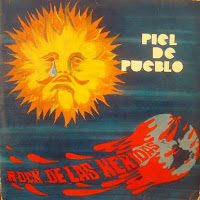
Piel De Pueblo - 'Rock De Las Heridas'
Piel De Pueblo
'Rock De Las Heridas'
Piel De Pueblo were a short-lived act that there is not a lot of info out there for but their sole album "Rock De Las Heridas" is one of the best LPs I have included here, I clearly like it as it's popped up twice before in the blog.

The whole thing has a druggy, loose feel which is somewhere dead in the middle of hard rock and heavy psych; tempos shift, pedals wah and guitar leads wail in the glorious fug of swaggering riffs, sometimes complemented by violin that's played with the same attitude.

The guitar glory of this record can be partly attributed to there being two lead players battling it out; Nacho Smilari (later of Cuero) and Pajarito Zaguri, who were presumably already in sync from playing together previously in La Barra de Chocolate.
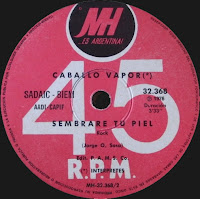
Caballo Vapor "Sembrare Tu Piel"
Caballo Vapor
"Sembrare Tu Piel"
Caballo Vapor (which amusingly translates as "Steam Horse" or "Horse Vapour") started out as a brass rock band that incorporated some hard rock, quite a unique proposition in Argentina at the time, and made a decent LP as such in 1973.

It seems they dropped the brass section and although they did not record another album, continued in a funky, commercial direction on various singles until 1977.

Admittedly I have not heard all these singles but it seems that one of them had a B-side which was one of the heaviest things they did and that's what's included here. "Sembrare Tu Piel" hits a mean groove and thuds along in a satisfyingly Status Quo-like manner, with excellent bluesy guitar licks ricocheting off the main riff.

Pescado Rabioso 2
Pescado Rabioso 2
Pescado Rabioso was the second prominent band of  Luis Alberto Spinetta after his first, Almendra, had split and he had been travelling for a while. Spinetta is regarded as one of the most important figures in Argentine rock and he appears to have been a very talented and diverse writer; the many acts he started, or was associated with, cover many types of rock from psych-pop to hard rock to fusion.

Pescado Rabioso's three LPs (which was only really two as band-efforts, as the third is a Spinetta solo record in all but name) were very diverse but had some great rocking tracks and Sombra De La Noche Negra ("Black Night Shadow") is one of them.

Plus (1978)
Plus (1978)
Plus was started around 1975 by two previous members of Escarcha; Hugo Racca (bass, vocals) and Julio Sáez (guitar, vocals).

The first LP "No Pisar el Infinito" is my favourite but as I have mined it for the blog before, here is a track from their second, which was called just "Plus" originally.

It's not quite as brooding or heavy as the great debut LP but it still has their excellent playing and good hard rock tracks, albeit in a slightly more upbeat, commercial vein. Singer Saul Blanch was later in heavy metal band Rata Blanca.

Aquelarre 1972
Aquelarre 1972
Here's a track from an off-shoot of Spinetta's Almendra, called Aquelarre (menaing 'Coven' or Witches' Sabbath). Rodolfo García (drums) and Emilio del Guercio (bass and vocals) formed it after Almendra split.

They were not a heavy rock band and certainly less-so than some of Spinetta's later bands, but the debut s/t album is where to find some nice rocking riffs with clavinet used to make them sound a bit more funky and distinctive. Héctor Starc's brilliant guitar is a joy to hear. 'Canto' (included here), 'Jugador' and 'Movimiento' are the groovy tracks but it's a good album all the way through, while their second album is more mellow.

Luis Alberto Spinetta - Almendra
(1971)
The penultimate track is from Luis Alberto Spinetta himself, from his first solo record after Almendra. I had some confusion with this as I first heard these songs on various re-issues that have come over the years that had different names, but it appears that the original release of the record was in 1971 and called 'Almendra', which is confusing; the cover of that issue even shows the band Almendra but in fact the music was played after Almendra split, by Spinetta with guests Pappo and drummer Héctor "Pomo" Lorenzo also of Pappo's Blues, as a three-piece. Various sources infer that the record label cashed-in on the defunct Almendra's status by using their image and giving the LP that name.

So on to the music. There's some of Pappo's heavy fuzz guitar but compared to the compact, efficient blues rockers of Papo's Blues, it's balanced by Spinetta's more ambitious song-writing and some people have compared its mixture of folk and rock to Led Zeppelin. This is especially apt as Spinetta's vocals do remind of Robert Plant's vocal stylings in places.

The mellower folk-inspired tracks outnumber the heavy ones but there's two absolute nuggets of heaviness on this LP: 'Castillo De Piedra' which is included here and features Pappo's fuzzy guitar grunt, and 'Era De Tontos' (which I included on Vol43) that is slower but menacing, in a 'No Quarter'-type way if I'm going to continue with Zep comparisons.

Pappo's Blues 2
Pappo's Blues 2
On to the final band in this comp and it's the one and only Pappo's Blues. In terms of heaviness and the kind of music this blog mainly exists for, Pappo's Blues is the go-to Argentine band in this particular volume, and their first three records in particular. I have used tracks from the first and third already in TDATS so here is a track from "Pappo's Blues 2" called "Insoluble", which displays his band's chugging blues-based rock.

Pappo started his band with some guys he met while they were all in an early formation of La Pesada del Rock and Roll; Black Amaya (drums) and Vitico Bericiartua (bass - soon replaced by David Lebón). By the third LP Amaya and Lebón had left to join Pescado Rabioso, so in came Héctor 'Pomo' Lorenzo on drums and Carlos Alberto 'Machi' Rufino on bass.

On February 25th, 2005, Pappo died in an accident on his motorcycle, leaving a legacy of excellent rock and blues in Argentine history. Since Pappo's Blues he had started bands such as Aeroblus and Riff, as well as continuing a solo and collaborative career, and is sorely-missed by the rock and metal scenes that he had a huge influence on.

Further related listening:
The Day After The Sabbath 43: Transfusión de Luz [Latin rock pt.1]
The Day After The Sabbath 84: Liberdade Espacial [Brazil pt.1]
The Day After The Sabbath 89: Pipa de la Paz [Mexico pt. 1]
The Day After The Sabbath 104: Onsta la Yerbita [Peru pt. 1]
The Day After The Sabbath 118: La Fuente del Ritmo [Latin and Chicano rock in the US]


TDATS social links


Share via:

Saturday, April 8, 2017

James Rutledge [of Bloodrock] - Hooray For Good Times [1976 Hard Rock Texas]

Download from [mf]
Unzip password:  tdats

Here's a really good LP from one-time drummer/singer of Texas hard rock band, Bloodrock. There's plenty of upbeat, melodic good-time tracks and heavy rockin' tracks too. Jim Rutledge should have made some more solo records! His departure from Bloodrock before album "Passage" marked what many people view as a decline in Bloodrock's quality, and Lee Pickens who plays on this record, left around the same time. Rumour has it that Rutledge originally left to strike out with a solo record collaboration with John Nitzinger, which was made but never released.


The title track is an especially nice track, a thoughful one almost sounding like Here I Go Again by Whitesnake in the first part, and the harder tracks like Soul Survivor, Drivin' You Insane and On My Way Up are some of the best, funkiest hard southern rock you may ever hear. Other players on this record include touring / session guitarist Doug Rhone (Gladstone / Neil Diamond), Michael Rabon (The Five Americans / Choctaw / solo), Jim Grant (Michael Rabon, The Five Americans), Thom Caccetta (Michael Rabon, Doc Severinsen), Dahrell Norris (Sonny & Cher, Freddy Fender, Dr. John) and Kenneth Whitfield (Texas Muzic Machine - With Jim Rutledge).

UPDATE FOR AUGUST 2022:
Quietus February 6, 2019

"The unreleased album by Jim Rutledge and John Nitzinger was tentatively titled "Blue", featuring songs written by Nitzinger and sung by Rutledge. I was privileged to receive a copy of it through a brief association with someone working on a Bloodrock biography which was published online many years ago. As for the album, it is a departure from anything we might have expected, featuring the Fort Worth Symphony Orchestra and a selection of tunes that were beautiful, touching, and more suited to crooners of the time than a couple of rockers like these two. Nonetheless it was well produced and displayed amazing versatility that couldn't have been imagined by Bloodrock or Nitzinger fans. Understandably, Capitol didn't see a percentage and chose to leave it in the vault."

Credits
Guitars - Michael Rabon, Doug Rhone, Lee Pickens, Tommy Savanna
Bass - Jim Grant, Thom Caccetta
Drums - Dahrell Norris
Keyboards - Kenneth Whitfield

Produced by Rutledge, Rabon And Smith
Engineered by Don Smith, Thom Caccetta

Tracklist
A1    Brown Paper Bag
A2    Laughin' And Cryin'
A3    One Step Ahead Of The Law
A4    Drivin' You Insane
A5    Sole Survivor
B1    Hooray For Good Times
B2    Star Trackin'
B3    On My Way Up
B4    I Can Fly
B5    New York City

Release infos
RYM
Discogs